

Blog Details
When people think about men’s health, they often focus on fitness, diet, or heart health. However, one important aspect that is frequently overlooked is testosterone, the primary male sex hormone responsible for much more than sexual function. It influences your energy levels, mood, muscle strength, bone health, fertility, mental clarity, and overall well-being.
Many men assume that feeling tired, gaining weight, losing interest in sex, or struggling with concentration is simply part of aging. While getting older naturally causes a gradual decline in testosterone levels, these symptoms may also indicate low testosterone, medically known as testosterone deficiency or male hypogonadism.
The challenge is that low testosterone doesn’t always develop overnight. Instead, it often appears gradually, making it difficult to recognize until symptoms begin affecting your work, relationships, physical performance, or emotional health. Some men notice changes in their libido, while others experience unexplained fatigue, brain fog, or a decline in muscle mass despite maintaining the same exercise routine.
Fortunately, low testosterone is a diagnosable medical condition—not just an inevitable consequence of growing older. Healthcare professionals can evaluate your hormone status through a blood testosterone test, identify possible underlying causes, and recommend appropriate treatment or lifestyle changes.
In this comprehensive guide, you’ll learn how to recognize the signs of low testosterone, understand what causes it, know when to seek medical help, and discover how doctors diagnose the condition using modern hormone evaluation techniques.
What Is Low Testosterone?
Low testosterone, also called androgen deficiency, occurs when the body does not produce enough testosterone to support normal physical, sexual, and psychological functions.
In men, testosterone is primarily produced by the testicles under the control of two important brain structures:
- Hypothalamus
- Pituitary gland
These organs work together in a sophisticated hormonal communication system.
- The hypothalamus signals the pituitary gland.
- The pituitary releases Luteinizing hormone (LH) and Follicle-stimulating hormone (FSH).
- LH stimulates the testicles to produce testosterone.
- FSH supports sperm production and male fertility.
If any part of this pathway malfunctions, testosterone production can decline.
Doctors generally classify testosterone deficiency into two major categories:
Primary hypogonadism
Primary hypogonadism occurs when the problem originates in the testicles themselves. Although the brain sends normal hormonal signals, the testicles cannot produce enough testosterone.
Secondary hypogonadism
Secondary hypogonadism develops when the hypothalamus or pituitary gland fails to stimulate the testicles properly. Even healthy testicles cannot produce sufficient testosterone without these hormonal signals.
Understanding which type you have is essential because treatment options and long-term management can differ significantly.
How Does Testosterone Affect Your Body?
Testosterone is involved in nearly every major system of the male body.
Healthy testosterone levels contribute to:
- Strong muscles
- Healthy bones
- Sexual desire
- Sperm production
- Emotional well-being
- Memory
- Motivation
- Physical endurance
- Fat distribution
- Hair growth
- Red blood cell production
When testosterone declines, multiple body systems may be affected simultaneously.
This explains why men with low testosterone often report several seemingly unrelated symptoms instead of just one.
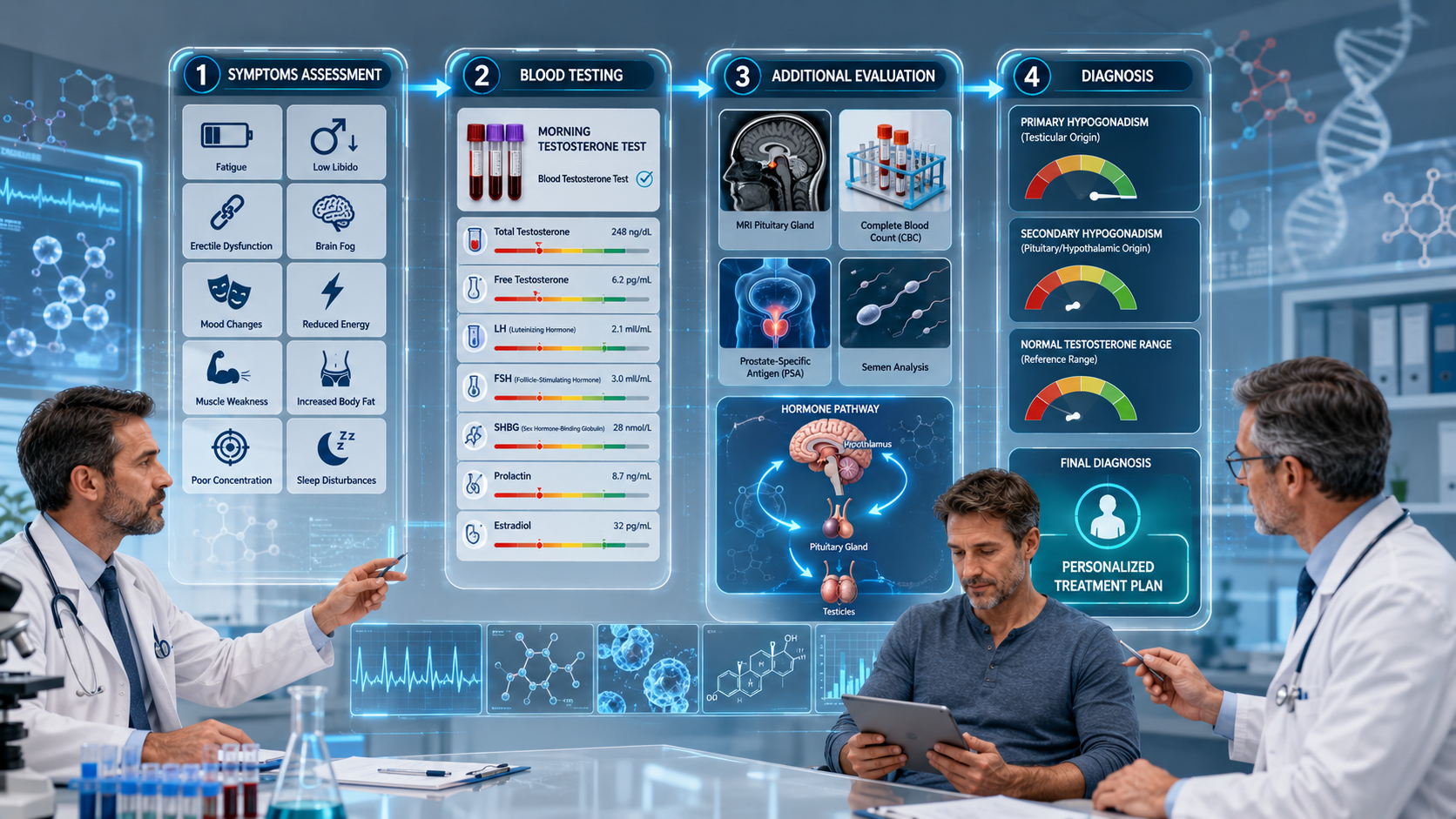
Early Signs That Your Testosterone May Be Low
Recognizing symptoms early allows treatment before complications become more severe.
Let’s examine the most common warning signs.
1. Low Libido or Reduced Interest in Sex
One of the earliest and most noticeable symptoms is low libido or reduced sex drive.
You may notice:
- Less interest in intimacy
- Fewer sexual thoughts
- Reduced spontaneous erections
- Decreased excitement
While stress or temporary illness can reduce sexual desire, a persistent decline lasting several months deserves medical attention.
2. Erectile Dysfunction
Many people assume erectile dysfunction always results from poor circulation.
In reality, testosterone also plays a critical role.
Low testosterone may cause:
- Difficulty achieving erections
- Weaker erections
- Difficulty maintaining erections
- Reduced morning erections
It’s important to remember that erectile dysfunction can have multiple causes, including cardiovascular disease, diabetes, anxiety, medications, and hormonal imbalances.
3. Constant Fatigue and Reduced Energy
Do you wake up tired despite sleeping eight hours?
Persistent fatigue, chronic tiredness, and reduced energy are among the most commonly reported symptoms of testosterone deficiency.
Many men describe feeling:
- Drained throughout the day
- Less motivated
- Unable to complete workouts
- Mentally exhausted
- Less productive at work
Unlike ordinary tiredness, hormone-related fatigue often persists despite adequate rest.
4. Loss of Muscle Mass
Testosterone is one of the body’s most powerful anabolic hormones.
When levels fall, many men develop:
- Decreased muscle mass
- Muscle weakness
- Slower workout recovery
- Difficulty building strength
You may notice that your usual exercise routine no longer produces the same results.
Even active men can experience muscle loss when testosterone remains low over an extended period.
5. Increased Body Fat
Many men become frustrated when they continue exercising yet still gain abdominal fat.
Low testosterone can contribute to:
- Increased body fat
- Reduced metabolism
- Difficulty losing weight
- Increased waist circumference
This hormonal imbalance can create a cycle where extra body fat further disrupts hormone production.
6. Mood Changes
Hormones affect the brain just as much as the muscles.
Men with testosterone deficiency frequently report:
- Depression
- Mood changes
- Irritability
- Less motivation
- Lower self-confidence
These emotional symptoms are often mistaken for work stress or burnout.
If emotional changes appear alongside physical symptoms, hormone testing may be worthwhile.
7. Brain Fog and Poor Concentration
Many patients describe an inability to think clearly.
Symptoms may include:
- Brain fog
- Poor concentration
- Difficulty solving problems
- Memory problems
- Reduced productivity
These cognitive symptoms may gradually worsen if hormone deficiencies remain untreated.
8. Sleep Problems
Sleep and testosterone have a two-way relationship.
Low testosterone may contribute to:
- Sleep disturbances
- Frequent nighttime awakenings
- Less restorative sleep
Conversely, poor sleep itself can lower testosterone production, creating a frustrating cycle.
Maintaining excellent sleep quality becomes an important part of improving hormone health.
9. Reduced Body Hair
Over time, testosterone deficiency may cause:
- Reduced body hair
- Slower beard growth
- Thinner facial hair
- Less chest or leg hair
This symptom usually develops gradually rather than suddenly.
10. Breast Enlargement
Some men develop gynecomastia, an enlargement of male breast tissue.
This may happen because lower testosterone allows estrogen activity to become relatively more prominent.
Doctors sometimes measure estradiol levels during hormone evaluation to determine whether hormone imbalance contributes to breast enlargement.
11. Hot Flashes
Although commonly associated with menopause, men with severe testosterone deficiency may experience hot flashes.
These episodes involve:
- Sudden warmth
- Sweating
- Facial flushing
- Temporary discomfort
They are more common in men receiving hormone-blocking treatments but can also occur in significant testosterone deficiency.
12. Fertility Problems
Low testosterone doesn’t always cause infertility, but hormonal imbalance can affect reproductive health.
Men may experience:
- Infertility
- Low sperm count
- Reduced sperm quality
When fertility is a concern, doctors often recommend a semen analysis alongside hormone testing.
13. Weak Bones
Most people associate testosterone with muscles, but it’s equally important for bones.
Long-term deficiency increases the risk of:
- Low bone density
- Osteoporosis
- Bone fractures
Because bone loss develops slowly, many men remain unaware until a fracture occurs.
14. Delayed Puberty in Younger Males
In adolescents, testosterone deficiency presents differently.
Possible signs include:
- Delayed puberty
- Lack of facial hair
- Minimal voice deepening
- Slow muscle development
- Delayed growth of reproductive organs
These symptoms require prompt evaluation by a specialist.
When Should You Be Concerned?
Experiencing one symptom occasionally does not necessarily mean you have low testosterone.
However, you should consider medical evaluation if you notice several symptoms together, especially if they persist for months. Examples include:
- Ongoing low libido or reduced sex drive
- Persistent fatigue and reduced energy
- Erectile dysfunction
- Brain fog, poor concentration, or memory problems
- Mood changes, depression, or irritability
- Decreased muscle mass despite regular exercise
- Increased body fat
- Signs of infertility or low sperm count
A healthcare professional can determine whether these symptoms are related to low testosterone, another hormonal imbalance, medication side effects, or an entirely different medical condition.
What Causes Low Testosterone?
The causes of male hypogonadism vary from person to person. In some cases, the problem begins in the testicles, while in others, it originates in the brain’s hormone-regulating centers—the hypothalamus and pituitary gland.
Understanding the cause is essential because treatment depends on whether the condition is classified as primary hypogonadism or secondary hypogonadism.
1. Natural Aging
One of the most common reasons for declining testosterone levels is aging.
Beginning around age 30–40, testosterone production naturally decreases by about 1% per year in many men. While this gradual decline is considered a normal part of aging, not every older man develops testosterone deficiency. Many maintain healthy hormone levels well into later life.
Age alone should never be used as the sole explanation for symptoms. If fatigue, reduced sexual desire, or muscle loss significantly affect your quality of life, it’s worth discussing hormone testing with a healthcare provider.
2. Obesity and Metabolic Health
Excess body weight is one of the leading reversible causes of low testosterone.
Men with obesity often have lower testosterone because excess fat tissue converts testosterone into estradiol, an estrogen hormone. Higher estradiol levels can suppress testosterone production through hormonal feedback mechanisms.
In addition, obesity is closely linked to:
- Type 2 diabetes
- Metabolic syndrome
- Insulin resistance
- Chronic inflammation
These conditions can further reduce testosterone production and worsen symptoms such as fatigue, decreased muscle mass, and increased body fat.
The encouraging news is that sustainable weight loss often improves hormone balance naturally.
3. Sleep Disorders
Sleep is one of the body’s most important hormone regulators.
Men with sleep apnea frequently experience lower testosterone because interrupted sleep affects overnight hormone production.
Even without sleep apnea, consistently poor sleep quality can reduce testosterone levels over time.
Common warning signs include:
- Loud snoring
- Gasping during sleep
- Morning headaches
- Excessive daytime fatigue
Treating sleep disorders often improves both energy levels and hormone health.
4. Chronic Illness
Several long-term medical conditions can interfere with hormone production.
Examples include:
- Chronic illness
- Kidney disease
- Liver disease
- HIV
- Autoimmune disorders
- Severe inflammatory diseases
When the body is under constant physical stress, hormone production may decrease as part of its adaptive response.
5. Medication Side Effects
Some prescription medications can suppress testosterone production.
Common examples include:
Opioid medications
Long-term use of opioid medications for chronic pain may reduce hormone signaling between the brain and testicles.
Corticosteroids
Extended use of corticosteroids, such as prednisone, may also interfere with testosterone production.
Patients taking these medications should never stop treatment on their own but should discuss potential hormonal side effects with their physician.
6. Cancer Treatments
Certain cancer therapies can damage testosterone-producing cells.
These include:
- Chemotherapy
- Radiation therapy
The degree of recovery depends on several factors, including age, treatment type, and the area exposed to radiation.
7. Testicular Conditions
Because testosterone is produced primarily in the testicles, any injury or disease affecting them may reduce hormone production.
Examples include:
Testicular injury
Serious testicular injury from accidents or sports trauma can permanently impair testosterone production.
Undescended testicle
An undescended testicle that was not corrected early in life may affect future hormone production and fertility.
Mumps orchitis
Although less common today due to vaccination, mumps orchitis can damage testicular tissue and lead to testosterone deficiency.
8. Genetic Conditions
Some inherited disorders affect testosterone production throughout life.
One well-known example is Klinefelter syndrome, a genetic condition in which males are born with an extra X chromosome.
Men with this condition often experience:
- Smaller testicles
- Infertility
- Lower testosterone
- Reduced muscle development
Early diagnosis allows better long-term management.
9. Iron Overload
A lesser-known cause is hemochromatosis, a condition in which excess iron accumulates throughout the body.
Iron deposits may damage the pituitary gland, reducing hormone production and leading to secondary hypogonadism.
When Should You See a Doctor?
Many symptoms of low testosterone overlap with stress, depression, thyroid disorders, and sleep problems.
You should consider professional evaluation if you experience multiple symptoms such as:
- Persistent low libido
- Erectile dysfunction
- Ongoing fatigue
- Brain fog
- Memory problems
- Mood changes
- Loss of muscle strength
- Fertility concerns
Early evaluation can help identify whether hormones—or another medical condition—are responsible.
Which Specialist Should You See?
Most men begin by visiting their primary care physician.
Depending on your symptoms, you may be referred to an:
Endocrinologist
An Endocrinologist specializes in hormone disorders and can evaluate complex cases involving the pituitary gland, thyroid, adrenal glands, and testosterone production.
Urologist
A Urologist specializes in the male reproductive system, urinary tract, fertility, erectile dysfunction, and disorders affecting the testicles.
Both specialists frequently work together when evaluating testosterone deficiency.
How Is Low Testosterone Diagnosed?
Diagnosis involves much more than checking a single laboratory number.
Doctors combine:
- Medical history
- Physical examination
- Symptom assessment
- Laboratory testing
- Imaging (when necessary)
This comprehensive hormone evaluation helps distinguish temporary hormonal fluctuations from true testosterone deficiency.
Why Timing Matters: The Morning Testosterone Test
Testosterone follows a daily rhythm.
Levels are highest early in the morning and gradually decline throughout the day.
For this reason, doctors usually recommend a morning testosterone test, typically performed before 10 a.m.
If the initial result is low, the test is often repeated on another morning to confirm the diagnosis before treatment is considered.
Total Testosterone vs Free Testosterone
Understanding these measurements helps explain why symptoms don’t always match laboratory results.
Total Testosterone
Total testosterone measures all testosterone circulating in your bloodstream.
This includes both:
- Bound testosterone
- Active testosterone
It is usually the first test ordered.
Free Testosterone
Only a small percentage of testosterone circulates as free testosterone.
This unbound hormone is biologically active and available for the body’s tissues.
Some men have normal total testosterone but low free testosterone, particularly if certain blood proteins are elevated.
Understanding SHBG
One important protein is Sex hormone-binding globulin (SHBG).
SHBG binds testosterone and controls how much hormone remains biologically available.
High SHBG levels may reduce free testosterone even when total testosterone appears normal.
Your doctor may order SHBG testing if symptoms and laboratory values don’t seem to match.
Additional Hormone Tests
To identify the underlying cause, doctors often measure several additional hormones.
Luteinizing Hormone (LH)
Luteinizing hormone (LH) helps determine whether the problem originates in the brain or the testicles.
High LH with low testosterone often suggests primary hypogonadism.
Low or normal LH with low testosterone may indicate secondary hypogonadism.
Follicle-Stimulating Hormone (FSH)
Follicle-stimulating hormone (FSH) supports sperm production.
Abnormal FSH levels may indicate impaired fertility or testicular dysfunction.
Prolactin
Elevated Prolactin can suppress testosterone production.
High prolactin levels sometimes result from pituitary tumors or medication side effects.
Estradiol
Although often considered a female hormone, Estradiol also plays important roles in men.
Testing estradiol may be helpful in men with:
- Breast enlargement
- Obesity
- Hormonal imbalance
When Is an MRI Needed?
Not every man with low testosterone requires imaging.
However, if blood tests suggest abnormalities involving the pituitary gland, your physician may recommend an MRI pituitary gland scan.
This imaging test helps detect:
- Pituitary tumors
- Structural abnormalities
- Other rare causes of hormone deficiency
Other Laboratory Tests
Because testosterone treatment can affect other aspects of health, additional laboratory testing is often recommended before therapy begins.
Complete Blood Count (CBC)
A Complete blood count (CBC) evaluates red blood cells, white blood cells, and platelets.
It provides important baseline information before treatment.
Prostate-Specific Antigen (PSA)
In middle-aged and older men, doctors may measure Prostate-specific antigen (PSA) before starting therapy to assess prostate health.
PSA testing is interpreted alongside age, symptoms, family history, and clinical findings.
Understanding the Normal Testosterone Range
Many patients ask, “What is the normal testosterone range?”
The answer isn’t as simple as a single number.
Reference ranges vary depending on:
- Laboratory methods
- Age
- Time of day
- Overall health
More importantly, doctors do not diagnose testosterone deficiency based solely on laboratory values. A diagnosis typically requires both:
- Consistent symptoms suggestive of low testosterone.
- Repeated blood tests confirming abnormally low hormone levels.
For example, one man may have hormone levels near the lower end of the normal range and feel perfectly healthy, while another with similar values may experience significant symptoms. This is why your healthcare provider considers the complete clinical picture rather than focusing on a single laboratory result.
Looking Ahead
Diagnosing low testosterone is about more than confirming a low number on a blood test. It involves understanding your symptoms, identifying the underlying cause, and ruling out other conditions that may produce similar complaints.
Whether the issue stems from primary hypogonadism, secondary hypogonadism, obesity, medications, or another medical condition, an accurate diagnosis is the foundation for effective treatment.
Treatment Options for Low Testosterone
There is no one-size-fits-all treatment for testosterone deficiency. Your healthcare provider will recommend an individualized plan after reviewing your symptoms, medical history, and laboratory results.
Testosterone Replacement Therapy (TRT)
The most widely recognized treatment for confirmed male hypogonadism is Testosterone replacement therapy (TRT).
TRT works by supplying the body with testosterone when it cannot produce enough on its own.
Depending on your medical needs and personal preferences, TRT may be prescribed as:
- Intramuscular injections
- Skin gels
- Transdermal patches
- Long-acting injections
- Implantable pellets
- Nasal formulations (in some countries)
Many men report noticeable improvements within several weeks to months, including:
- Increased energy
- Better mood
- Improved libido
- Better erectile function
- Increased muscle strength
- Reduced body fat
- Enhanced motivation
- Improved quality of life
However, TRT is not appropriate for everyone. It should only be started after a confirmed diagnosis based on symptoms and repeated laboratory testing, and always under the supervision of a qualified physician.
Monitoring During TRT
Testosterone therapy requires regular follow-up visits to ensure that treatment is both effective and safe.
Your healthcare provider will periodically evaluate:
- Symptom improvement
- Testosterone levels
- Blood pressure
- Weight
- Side effects
- Overall health
Certain laboratory tests are especially important.
Hematocrit Monitoring
One of the most important follow-up tests is Hematocrit monitoring.
Testosterone therapy can stimulate red blood cell production. If hematocrit becomes too high, the blood may become thicker than normal, increasing the risk of complications in some individuals.
Regular monitoring allows your physician to adjust treatment if necessary.
Complete Blood Count (CBC)
Although discussed during diagnosis, a Complete blood count (CBC) is also repeated periodically during treatment to monitor changes in red blood cell levels and overall blood health.
Prostate-Specific Antigen (PSA)
For eligible men, Prostate-specific antigen (PSA) testing may continue during treatment to monitor prostate health alongside routine physical examinations.
Current evidence does not show that TRT causes prostate cancer, but appropriate screening remains an important part of ongoing care for men at risk.
What If You Want to Have Children?
This is one of the most important discussions to have before starting treatment.
Although TRT can improve symptoms of low testosterone, it may reduce the body’s natural sperm production and temporarily affect fertility.
If you hope to become a father in the future, tell your doctor before beginning treatment.
Fertility Preservation
Discussing fertility preservation early allows you and your healthcare provider to choose treatments that support both hormone balance and future family planning.
Depending on your situation, options such as sperm banking may be considered before certain treatments.
Human Chorionic Gonadotropin (hCG)
Instead of TRT, some men benefit from Human chorionic gonadotropin (hCG).
This medication stimulates the testicles to continue producing testosterone naturally while helping preserve sperm production in appropriate patients.
It is commonly considered in younger men with fertility goals.
Clomiphene Citrate
Another fertility-friendly treatment is Clomiphene citrate.
Rather than supplying testosterone directly, Clomiphene stimulates the body’s hormonal signaling between the hypothalamus, pituitary gland, and testicles, encouraging natural testosterone production.
Not every patient is a candidate, but it may be an effective option for selected men, especially those with secondary hypogonadism who wish to maintain fertility.
Lifestyle Changes That Naturally Support Healthy Testosterone Levels
Medication is only one part of managing testosterone deficiency. Everyday habits have a significant influence on hormone production and overall health.
Even men receiving TRT often experience better outcomes when they combine treatment with healthy lifestyle choices.
Maintain a Healthy Weight
As discussed earlier, excess body fat is strongly associated with lower testosterone levels.
Gradual, sustainable weight loss may help:
- Improve hormone balance
- Increase energy
- Reduce inflammation
- Improve insulin sensitivity
- Support heart health
Crash diets and extreme calorie restriction should be avoided because they may negatively affect hormone production.
Follow a Healthy Diet
There is no single “testosterone diet,” but a balanced healthy diet provides the nutrients your body needs to support hormone production.
Focus on:
- Lean proteins
- Fruits and vegetables
- Whole grains
- Healthy fats
- Nuts and seeds
- Legumes
- Oily fish rich in omega-3 fatty acids
Limiting ultra-processed foods and excessive added sugars can also benefit metabolic health.
Resistance Training
Exercise is one of the most effective natural ways to support hormone health.
Regular resistance training helps:
- Preserve muscle mass
- Improve strength
- Reduce body fat
- Enhance insulin sensitivity
- Improve mood
- Support healthy testosterone production
A combination of strength training and moderate cardiovascular exercise provides the greatest overall health benefits.
Improve Sleep Quality
Testosterone production occurs primarily during sleep.
Improving sleep quality may naturally support healthy hormone levels.
Good sleep habits include:
- Maintaining a consistent bedtime
- Limiting screen exposure before sleep
- Keeping the bedroom cool and dark
- Avoiding heavy meals late at night
- Seeking treatment for suspected sleep apnea
Even small improvements in sleep can positively affect energy, mood, and hormone balance.
Stress Management
Chronic stress increases cortisol, a hormone that can interfere with testosterone production over time.
Healthy stress management strategies include:
- Regular physical activity
- Meditation
- Deep breathing exercises
- Yoga
- Spending time outdoors
- Talking with trusted friends or family
- Professional counseling when needed
Reducing stress benefits both physical and mental health.
Address Nutritional Deficiencies
Certain nutrient deficiencies are associated with hormonal health.
Vitamin D Deficiency
Some studies suggest that correcting Vitamin D deficiency may support normal testosterone production in individuals who are deficient.
Safe sun exposure, dietary sources, and supplements may be recommended when appropriate.
Zinc Deficiency
Zinc deficiency has also been linked to impaired testosterone production.
Foods naturally rich in zinc include:
- Oysters
- Beef
- Pumpkin seeds
- Chickpeas
- Lentils
- Dairy products
Supplementation should only be used when medically indicated, as excessive zinc intake can also be harmful.
Reduce Harmful Lifestyle Habits
Several everyday habits can negatively affect testosterone levels and overall health.
Alcohol Consumption
Excessive alcohol consumption may interfere with hormone production, liver function, and reproductive health.
Moderation is generally recommended.
Smoking
Smoking is associated with numerous health risks, including cardiovascular disease, reduced fertility, and impaired overall health.
Quitting smoking benefits not only testosterone-related health but nearly every organ system in the body.
Can Low Testosterone Be Prevented?
Not every cause of testosterone deficiency is preventable. Genetic conditions such as Klinefelter syndrome, injuries, or damage from cancer treatments cannot always be avoided.
However, many lifestyle-related causes can be addressed by:
- Maintaining a healthy weight
- Exercising regularly
- Following a nutritious diet
- Sleeping well
- Managing stress
- Avoiding tobacco
- Limiting alcohol
- Treating chronic medical conditions
- Attending regular health checkups
These habits support long-term hormonal health and reduce the risk of many chronic diseases.
Frequently Asked Questions
Can low testosterone occur in younger men?
Yes. Although testosterone naturally declines with age, younger men can also develop male hypogonadism due to genetic conditions, hormonal disorders, obesity, medications, injuries, or other medical problems.
Can low testosterone cause depression?
It can contribute to low mood, reduced motivation, and symptoms of depression in some individuals. However, depression has many possible causes, so a comprehensive medical evaluation is important.
Is fatigue always caused by low testosterone?
No. Fatigue can result from poor sleep, anemia, thyroid disorders, chronic illness, stress, nutritional deficiencies, depression, or many other medical conditions. Blood testing helps determine whether testosterone deficiency is involved.
Should I take testosterone supplements without testing?
No. Over-the-counter products marketed as “testosterone boosters” are not a substitute for proper medical evaluation. Self-treating without confirming low testosterone can delay the diagnosis of other underlying conditions and may expose you to unnecessary risks.
How long does treatment take to work?
The response varies from person to person. Some men notice improvements in energy and sexual desire within a few weeks, while changes in muscle mass, body composition, and bone health often take several months.
Conclusion
Understanding how to know if your testosterone is low begins with paying attention to your body. Symptoms such as persistent fatigue, low libido, erectile dysfunction, decreased muscle mass, brain fog, mood changes, and reduced energy should not be dismissed as an unavoidable part of getting older.
The good news is that testosterone deficiency is a diagnosable and treatable condition. A proper medical evaluation—including a detailed history, physical examination, symptom review, and laboratory testing—can determine whether your symptoms are related to low testosterone or another health issue.
Treatment may include Testosterone replacement therapy (TRT), fertility-preserving medications like Human chorionic gonadotropin (hCG) or Clomiphene citrate, or targeted lifestyle improvements such as weight loss, resistance training, a healthy diet, better sleep quality, and effective stress management. Addressing Vitamin D deficiency, Zinc deficiency, limiting alcohol consumption, and quitting smoking can also support long-term hormonal health.
Most importantly, avoid self-diagnosing or starting hormone therapy without professional guidance. If you’re experiencing persistent symptoms, schedule an appointment with your healthcare provider, an Endocrinologist, or a Urologist. Early diagnosis and personalized treatment can improve your energy, confidence, fertility, bone health, and overall quality of life.
Taking action today is an investment in your future. By understanding your hormones and making informed health decisions, you can protect both your sexual health and reproductive health for years to come.
Medical Disclaimer: This article is intended for educational purposes only and should not replace professional medical advice, diagnosis, or treatment. Always consult a qualified healthcare professional regarding symptoms, testing, or treatment related to testosterone levels or any other medical condition.
Elemmentor Box
Dr. Jenifer Olivia
Cardiologist, Maxcare Hospital
Sed ut perspiciatis unde omnis iste natus error sit voluptatem accusantium.
Recent Posts
How Do I Know If My Testosterone Is Low?
How to Improve Immunity Naturally: Expert Backed Tips
Doctor Recommended: Simple Tips to Improve Immunity
Categories
Tag Cloud